
 00:00:00Home
Loading
0
Leading all design from pre‑seed to a $500m valuation
We led all of Depth First's design from their earliest days through their $80m Series B, evolving the brand, product, and marketing as the company scaled, so the team could stay focused on building.
Visit Live Site[]
[The website]
A website that leads with proof.
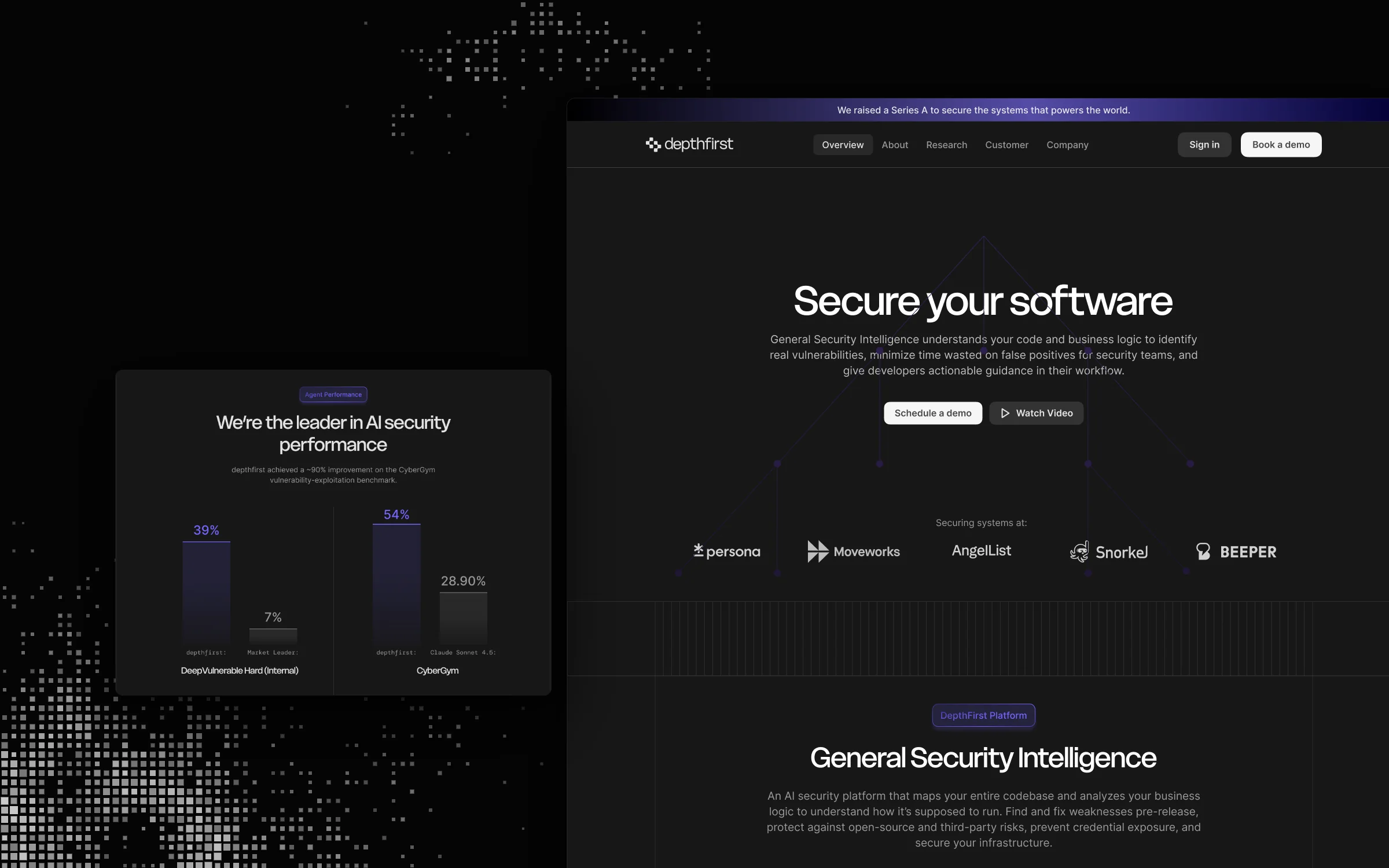
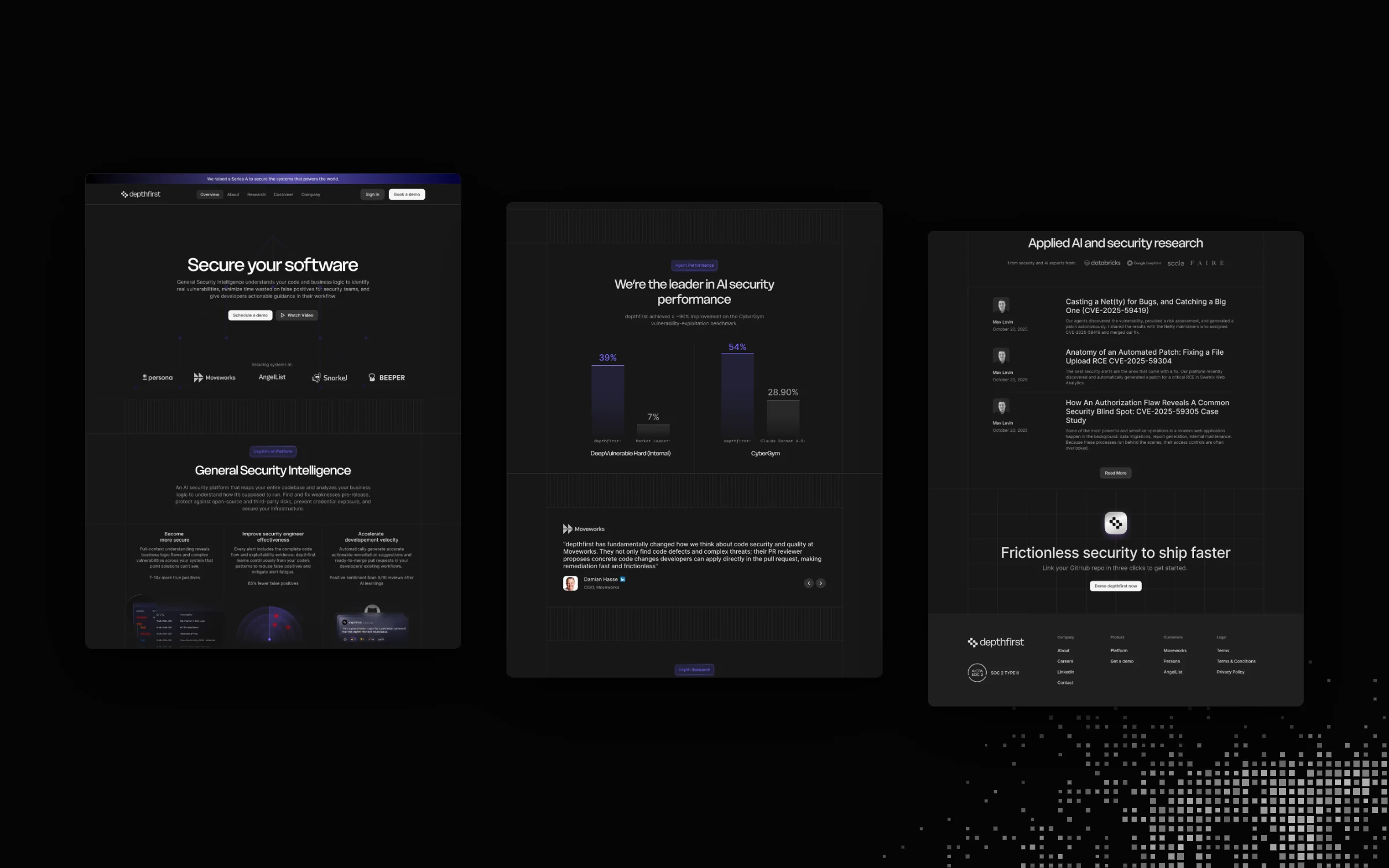
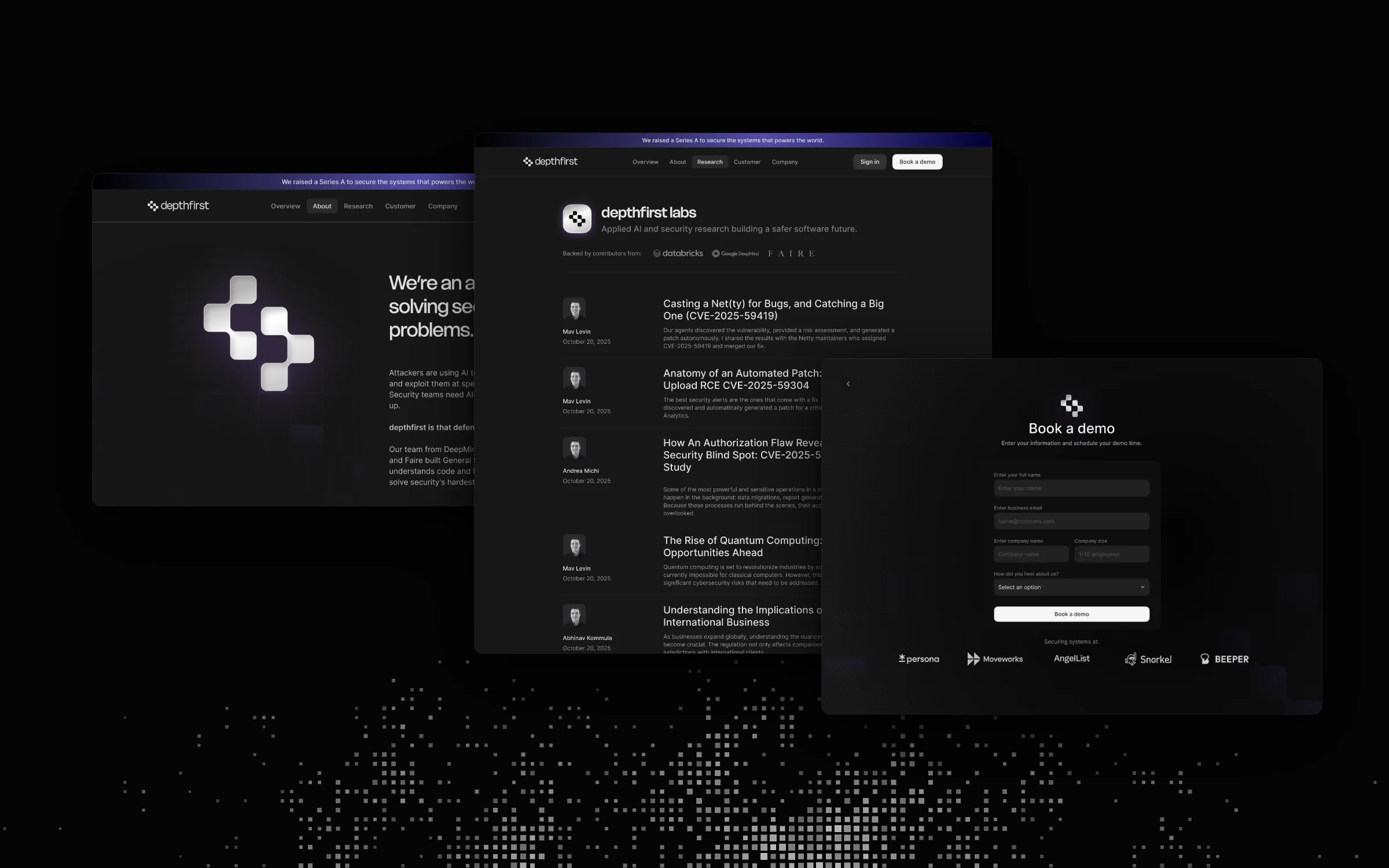
We designed DepthFirst's marketing site for desktop and mobile: the landing page, About, Research, customer stories and case studies, and booking a demo.
The landing page goes from what General Security Intelligence does to its benchmark results, customer quotes and the lab's research, with a demo a click away throughout.



[The product]
A security platform that fixes what it finds.
DepthFirst connects to a team's GitHub repositories and scans their code, dependencies, containers and secrets, then opens pull requests that repair what it finds. An AI Security Reviewer comments on every pull request.

[The problem]
It showed what the engine did, not what to do next.
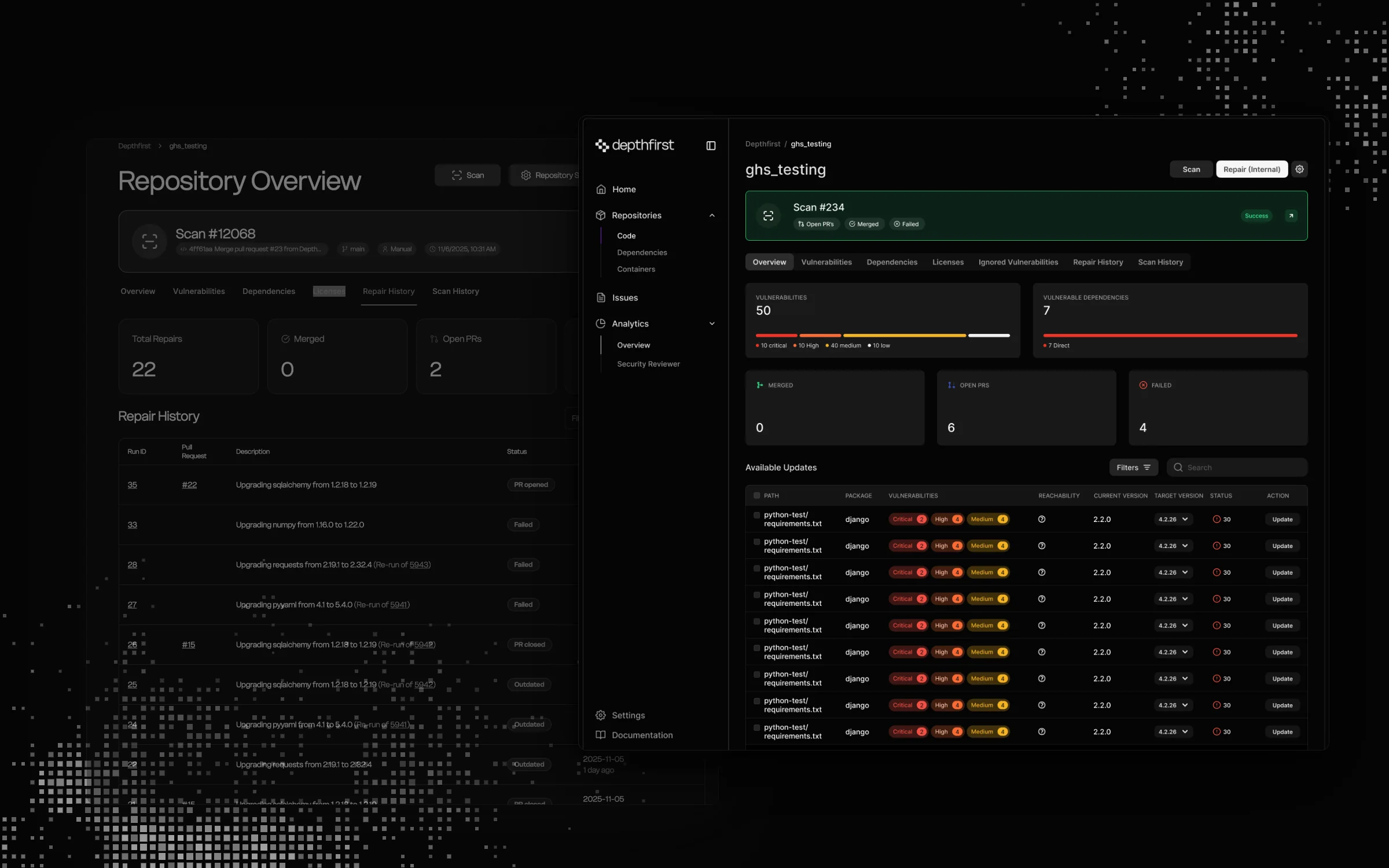
A repository opened on its repair history: every automated run, its pull request and its status. In staging that was 22 repairs, none merged and 10 failed, the same upgrade tried again and again.
Accurate, but it didn't answer what people open it to find out: what's most dangerous, and what can be fixed today.
[01 · Repositories]
From a log to a to-do list.
A repository now opens on its overview: vulnerabilities by severity, how many dependencies are vulnerable and how many of those are direct, and the fixes merged, open or failed.
Below it, every available update, with whether the vulnerable code is reachable, the version to move to and a button to do it. The run log is a tab away.

[02 · Home]
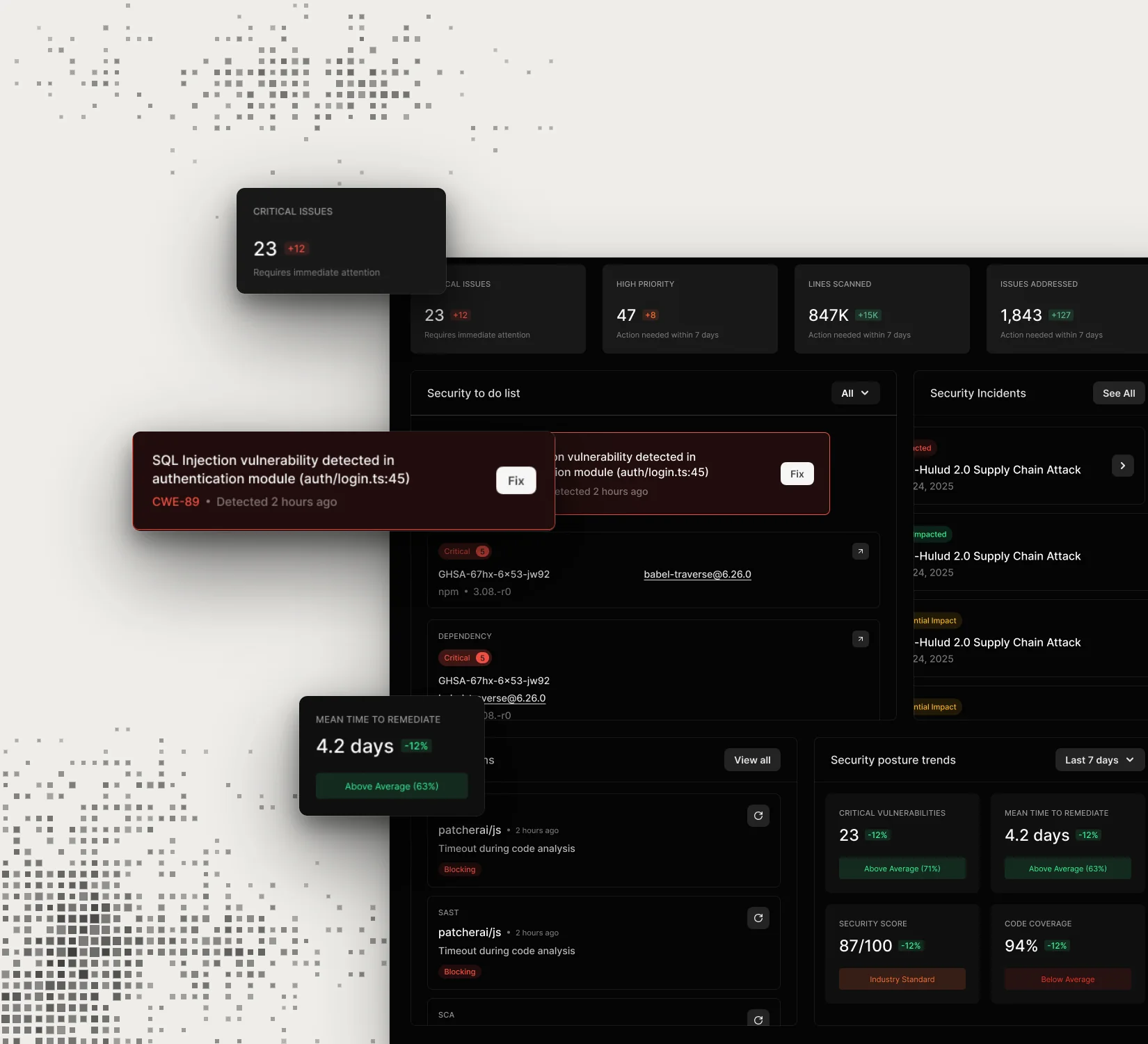
A home that starts with the most urgent thing.
The dashboard leads with the day's security to-do list, the most urgent finding first with a one-click fix, beside live incidents that say whether a public attack like the Shai-Hulud 2.0 supply-chain attack reaches you, failed scans, and posture trends.
It took six passes to get the balance right.
[03 · Security Reviewer]
Making the AI's work visible.
The Security Reviewer comments on pull requests on its own. Its analytics show what it did over any period: pull requests reviewed, comments made and addressed, feedback and what it learned, with each review's findings.
When a buyer asks whether the AI is helping, this is the answer.


[04 · Sales]
Designed around how it's sold.
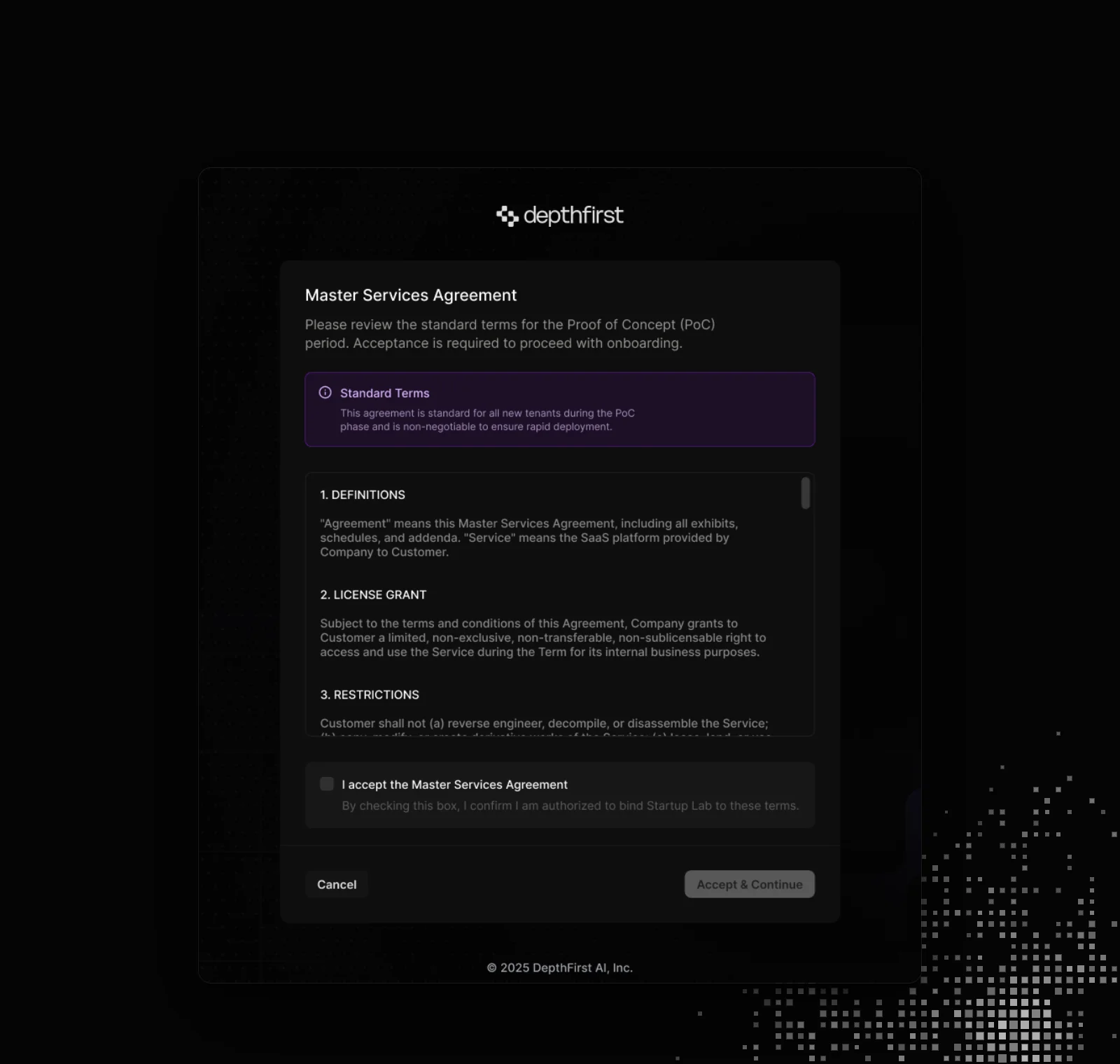
DepthFirst starts with a proof of concept, so a new team accepts the PoC agreement as part of onboarding and starts straight away.
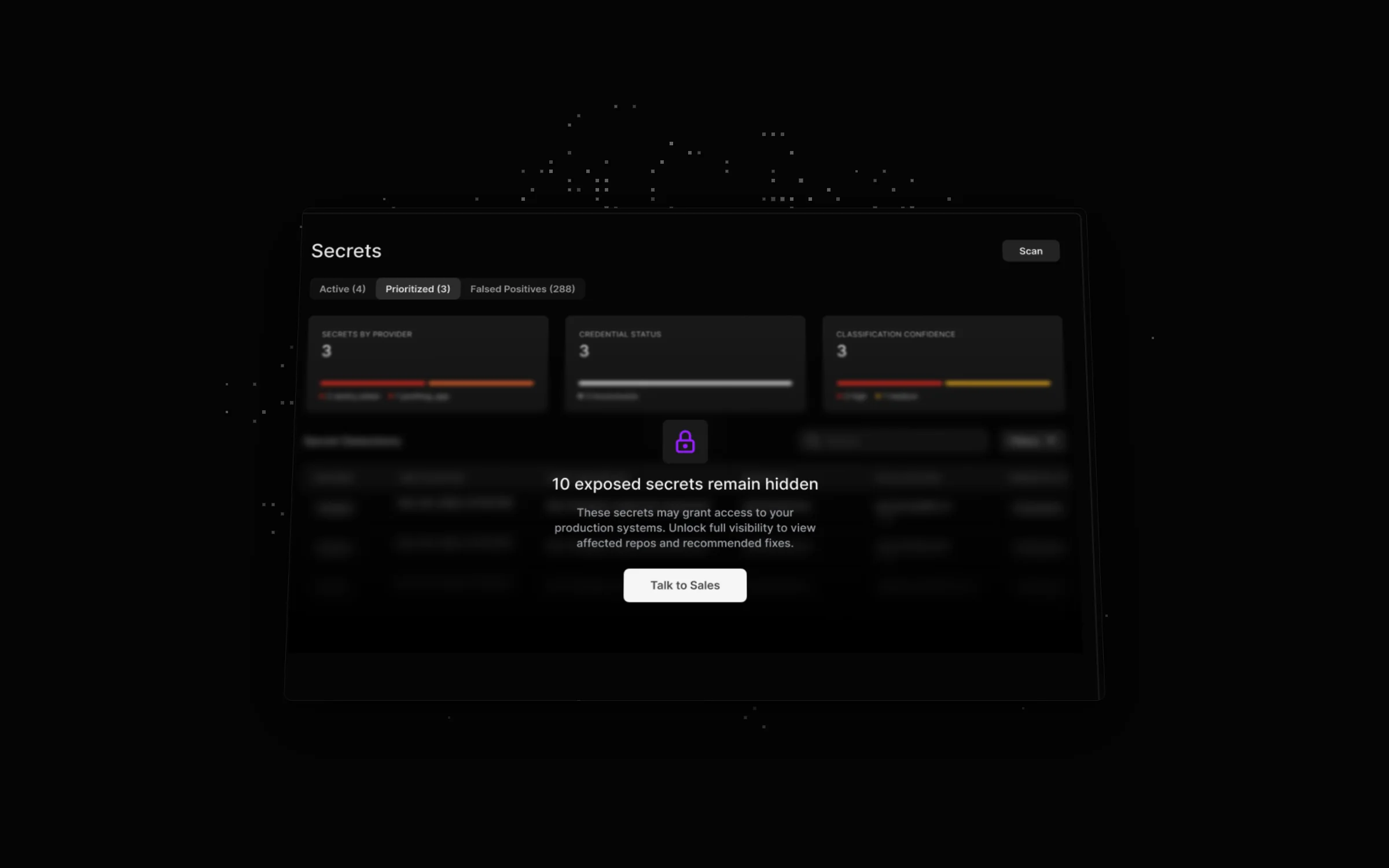
Paid findings are shown, then held back: on Secrets, the real results sit blurred behind a count and a way to talk to sales.
[05 · Workflows]
Into the tools teams already use.
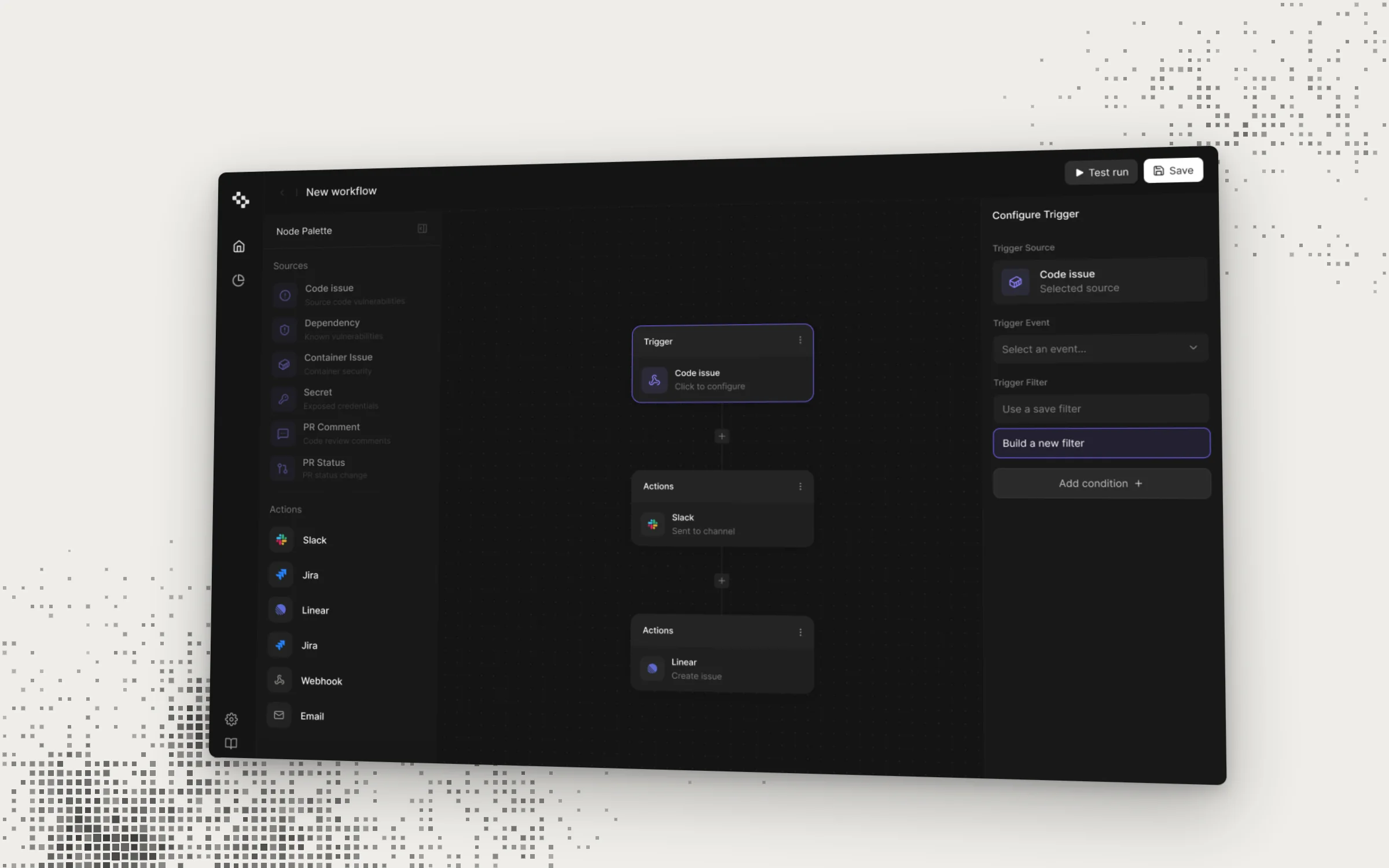
A workflow builder sends findings where people work: pick a trigger (a code issue, a dependency, a container, a secret, a pull request's comments or status), filter it, then post to Slack, open a Jira or Linear issue, call a webhook or send an email, with a test run before saving.
[06 · Design system]
One system, light and dark.
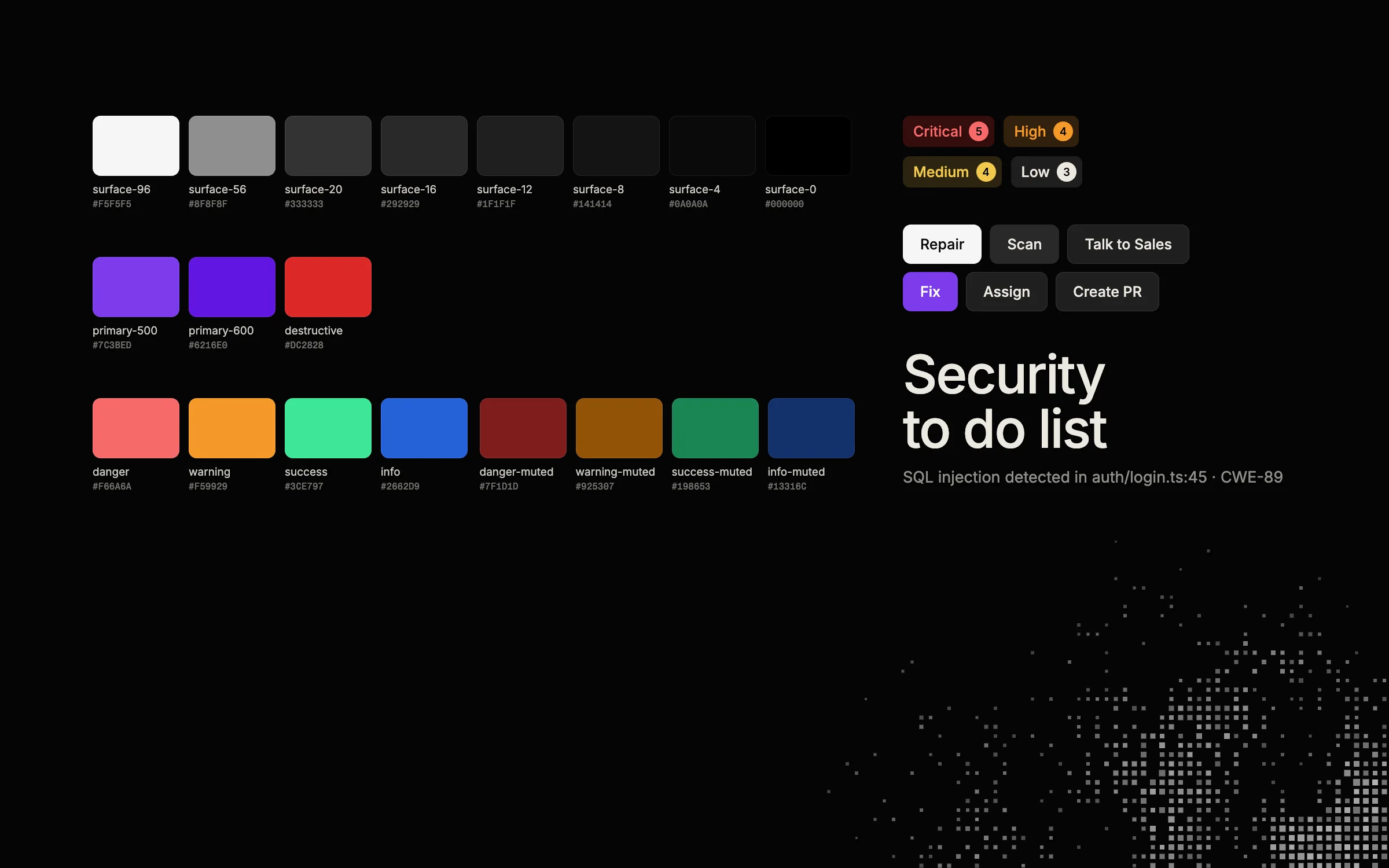
Everything sits on one design system: semantic colour tokens for light and dark, type and spacing scales for desktop and mobile, and a component library from severity badges and finding actions to tables and navigation.
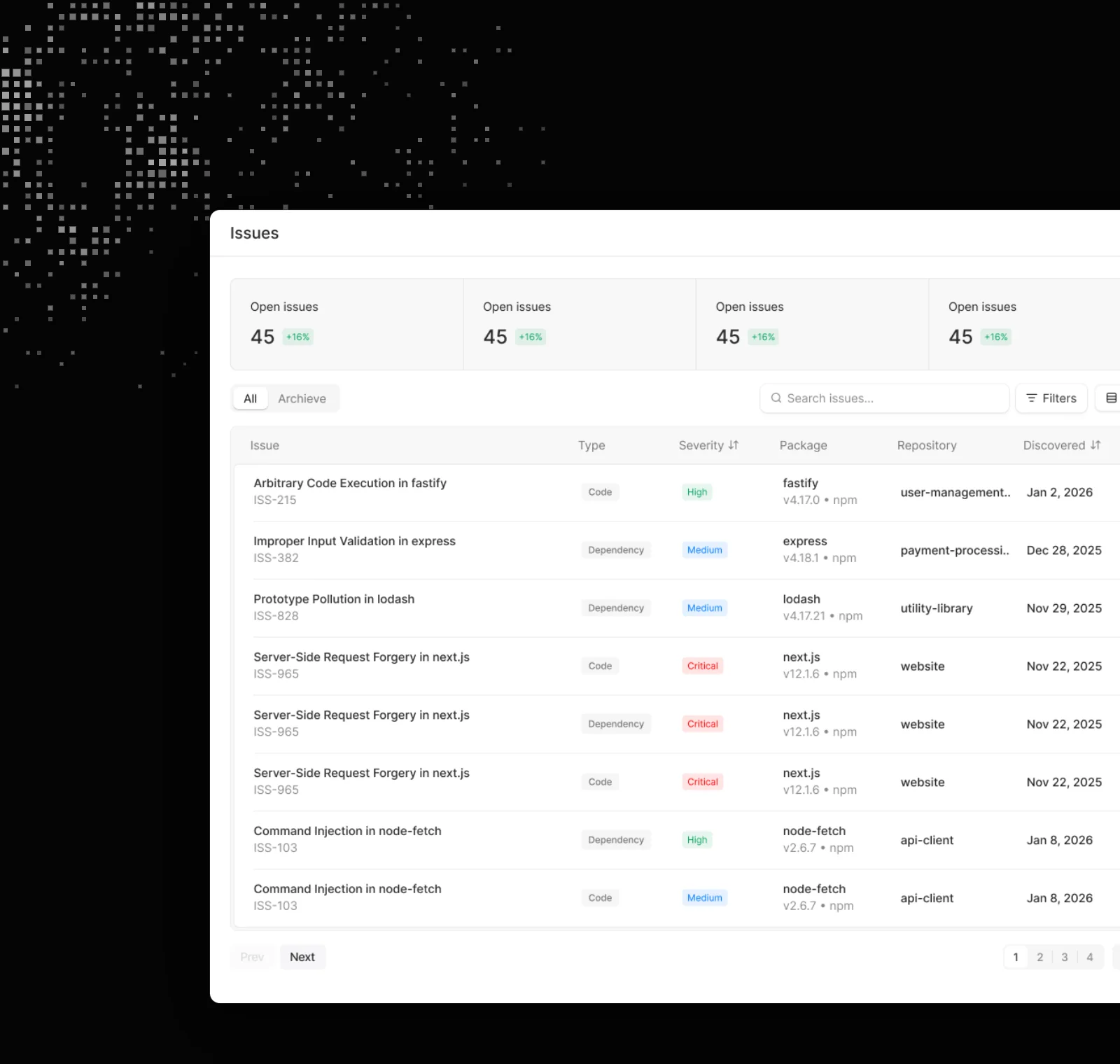
Light mode arrived with a single Issues list for code and dependency findings.

[Outcome]
From pre-seed to a $500m valuation.
We've designed DepthFirst's product, brand and marketing from its earliest days through a $40m Series A, an $80m Series B and a $500m valuation, as it grew from scanning code into a platform that finds, fixes and reviews.

